Keeping Rabbits
General
Rabbits are small mammals in the family Leporidae of the order Lagomorpha, found in several parts of the world. There are eight different genera in the family classified as rabbits, including the European rabbit, cottontail rabbits, and the Amami rabbit. There are many other species of rabbit, and these, along with pikas and hares, make up the order Lagomorpha. The male is called a buck and the female is a doe; a young rabbit is a kitten or kit.
Rabbits: Friendly, intelligent and clean, Rabbits make great family pets. With space to exercise, suitable accommodation, food and bedding most Rabbits are happy living indoors or outside. However, you will need to devote some time every day to their care. Rabbits generally need more attention than most smaller pets and can occasionally scratch and bite. For this reason they are considered unsuitable pets for younger children. However they make ideal pets for older children under supervision of an adult. Housing Outdoor Rabbits Your Rabbit hutch must be weatherproof with a separate nest area and plenty of dry bedding (clean straw is ideal). Ideally a hutch for two medium sized Rabbits should measure 150 x 60 x 60cm. But if your hutch is smaller, consider adding a separate run in the garden or allowing some daily supervised exercise for your pets outside the cage. The hutch should allow shade during the heat of the day and shelter from strong winds. A grass run can be built into the hutch or located elsewhere in your garden again with a nest area protected from the sun. A litter tray can be emptied daily and makes the hutch easier to clean. Indoor Rabbits Rabbits love company, making them great house pets. A quiet area for sleep, a straw-filled nest box and a clean litter tray are all you need for a happy indoor Rabbit. Some Rabbit-proofing may be necessary (cables and houseplants are very chewable ) and you ll need to ensure your Rabbit has an outdoor run in the garden Rabbits need natural light to obtain vitamin D. Rabbits can mix well with other domestic pets but careful introduction and supervision is required. Types of Rabbit There are many varieties, each with their own characteristics. Here s some general tips: Male Rabbits tend to be more predictable and even-tempered Giant breeds require more space and more feed Some dwarf varieties can be temperamental so are less suitable for children Longhaired Rabbits will require daily grooming and care Common breeds such as Dutch, English, Netherland Dwarf and Dwarf Lop Eared are more docile. Despite their names some breeds can grow quite large so always ask for advice first Feeding A typical Rabbit diet should be 75% hay with plenty of fresh water. A good quality pellet will provide any additional nutrients and vitamins they need. They also enjoy fresh vegetation carrots, spinach, watercress, broccoli, apples, and dandelion leaves but care should be taken not to overfeed. Never feed your Rabbit grass clippings, potatoes, or lettuce as these can cause health problems. Looking after your Rabbit Exercise & Entertainment: All Rabbits need daily exercise so encourage your Rabbit to practise its natural behaviour. A pipe in its hutch can act as a burrow, or a box filled with shredded paper can encourage digging include some root vegetables to nibble on as a treat. Handling: Young Rabbits can be nervous and should be allowed to gradually get used to their surroundings and to you. For the first few days, talk gently to your Rabbit to build up trust, then slowly introduce your hand into the hutch. Your Rabbit will become inquisitive and more confident around you. After a week or two, try picking up your pet using both hands. Place your thumb across its shoulders with your fingers wrapped gently around the ribs; place your other hand beneath the hindquarters for support. This is a good time to start grooming your Rabbit something which should be done daily. Breeding: Rabbits can breed very quickly from 4 months old. Pregnancy lasts 30-32 days and litter sizes vary from 4-12 Rabbits. Baby Rabbits must not be touched for the first 4 days and will open their eyes after 8-10 days. Babies can be removed from their mother at 5-6 weeks. Tips for a happy healthy Rabbit Community: One Rabbit will become very lonely on its own so it s best to keep a compatible pair or group. Neutering and spaying will prevent unwanted litters and fighting. Generally two neutered males or two un-neutered females will live together, or a neutered male and an un-neutered female. We do not recommend keeping Rabbits and Guinea Pigs together as their requirements are very different. Health: A healthy Rabbit will be alert, have discharge-free eyes and nose and a shiny coat. Breathing should be quiet and regular. If you are worried about any aspect of your Rabbit s health, seek veterinary advice. For a healthy life, your Rabbit needs the following: Your time and attention - they should be checked twice a day A good balanced diet with no sudden changes Clean dry housing, cleaned once a week with a mild disinfectant No extreme or sudden changes in temperature Water bottle and feed bowls cleaned daily Gnawing blocks and chew toys to help wear their continually growing teeth Daily grooming for longhaired Rabbits Weekly grooming for short-coated Rabbits Your rabbit will pass 2 types of faeces: During normal daytime they will pass a hard pellet, which is normally what you will find. At night they pass faeces known as "Caecotrophs" - soft, mucousy pellets which will be directly eaten from the anus. This is normal behaviour. However obese rabbits will have problems with this, so do not allow a rabbit to become obese..
Rabbits are a popular choice for many families with an estimated 1.5 million rabbits kept as pets in the UK [PDSA Animal Wellbeing Report 2016]. And it's no surprise as rabbits are highly intelligent, inquisitive animals. Owning rabbits' can be extremely rewarding. Rabbit's come in a variety of breeds, shapes and sizes and each bunny has there own unique personality. Typically they'll live for 8 - 12 years, but some may live for longer. Take a look around at our rabbit care advice to find out how to keep your bunnies happy and healthy. We have hundreds of rabbits in our care who are all looking for loving new homes. Start your search for a rabbit today. Rabbit factfile Pet rabbits are related to the wild European rabbit, the biology and behaviour of pet rabbits is very similar to that of their wild cousins. Why not read our information on ensuring your rabbit has a suitable place to live? Rabbits are highly social. Rabbits are territorial animals and form complicated social structures. Find out more about appropriate company for rabbits. Rabbits have an unusual digestive system. Food is passed through their gut and special droppings, called caecotrophs, are produced. Rabbits eat these caecotrophs, allowing the food to be re-ingested. Ensure your rabbit's digestive system is kept in tip-top condition by providing a healthy diet. Rabbits have continuously growing teeth. A rabbit's top front teeth grow at a rate of 3mm a week! Keep your rabbit healthy by following our health and welfare advice, including information about how to check your rabbit's health. Rabbits are intelligent. Pet rabbits can be taught to respond to commands using positive reward-based training. Discover more about the behaviour of rabbits.
Think carefully! Ready to give rabbits the life they deserve? Despite being the third most popular pet in the UK, rabbits are among the most abused and neglected. Countless rabbits spend miserable lives confined to a hutch, alone and with little or no space to exercise, mostly because owners don t realise what s involved before taking them on. Before you take on rabbits as pets, please read these Advice pages to get an idea of everything involved in their care. If you can t commit to giving them what they need to live full and contented lives then rabbits are not for you. Are rabbits right for you? It s an important question because there are a lot of myths about what rabbits are like as pets, so it s important to know what s involved. But it s just as important to think about the following question Are you right for rabbits? Countless rabbits suffer neglect at the hands of owners who don t understand, or aren t ready to commit to their rabbits needs. We cover both these questions on this page take just a little time to read it. Rescue shelters are bursting at the seams with rabbits abandoned by owners who didn t take the trouble to find out what was involved an estimated 67,000 rabbits a year go through rescue. Rabbits are NOT Good pets for children Rabbits are rarely cuddly as prey animals they are nervous by nature and can bite or scratch when stressed. Building up a relationship with a rabbit takes time and patience and has to be on the rabbit s terms. Children often lack this patience. Happy to be picked up/petted Rabbits are a prey species, so when they re picked up their instinct tells them they have been caught by a predator, and they often react aggressively. Most good owners will only pick up the rabbits to check their health. The pleasure is in watching them display their natural behaviours. Happy in small spaces The Victorians kept rabbits in hutches for easy access for meat and the habit stuck. Wild rabbits live in large underground warrens. When they are above ground they cover a large area each day. Pet rabbits need a living area that is at least 10 feet by 6 feet with permanent access to a living area. Happy living alone Studies show that rabbits value companionship almost as much as food. Watch a pair or group of bonded rabbits snuggling up together and cleaning each other and you ll see exactly why it s cruel to keep a rabbit on its own. Easy to look after Rabbits should be cleaned out every day and given fresh hay and bedding. They can live for over ten years so that s a lot of clean outs! They need annual vaccinations and can be very susceptible to medical problems, so expect visits to the vet! Cuddly toys Rabbits suffer for their looks. Children see a cute and fluffy rabbit in a pet shop and pester their parents to buy it. But as with their toys, children often lose interest quickly and the rabbit is abandoned or endures a miserable life alone in a hutch at the end of the garden. Cheap pets Whilst pet rabbits are inexpensive to buy, caring for them isn t. You ll need a secure outdoor enclosure or good quality indoor cage as well as food, hay and bedding, neutering (castrating for males, spaying for females), vaccination and vet trips. Caring for a pair of rabbits over their lifetime can cost over 10,000. Rabbits are Beautiful, curious animals that deserve to live full and enriched lives. The list above highlights just some of the misconceptions about rabbit care. The bottom line is that looking after rabbits is a big commitment. You must have at least two, have them neutered, provide them with an environment that allows them to display their natural behaviours, clean them out and check them over every day, take them to the vet for vaccinations, check-ups and for any treatment they might need, feed them unlimited good quality hay, along with fresh vegetables and some good quality pellets. And all this for up to 12 years. It doesn t make you a bad person if you don t think that s for you. In fact, if there were more people who really thought about what was involved and decided that it wasn t for them, then rescue shelters wouldn t be at crisis point and there wouldn t be so many rabbits neglected and suffering at the end of the garden, all but forgotten. Bunny buddies It s a myth that rabbits should be kept with guinea pigs. They have different dietary requirements and the guinea pig can easily be injured by the larger rabbit. A huge benefit of keeping rabbits together is their mutual grooming this does not happen with a guinea pig. Spectator sport The real pleasure of having rabbits is seeing them act like rabbits! Watching them displaying their natural behaviours of running, jumping, digging and foraging, or simply grooming their partner is a joy to behold. And if you get to see a flop or a binky then you know you re doing something right!
Feeding
Keeping Rabbits is under construction.
Keeping Rabbits is under construction.

Housing
Keeping Rabbits is under construction.
Keeping Rabbits is under construction.

Health
Keeping Rabbits is under construction.
Keeping Rabbits is under construction.
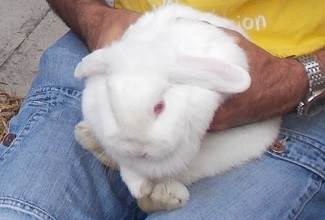
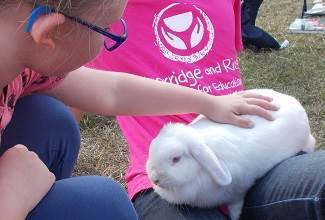
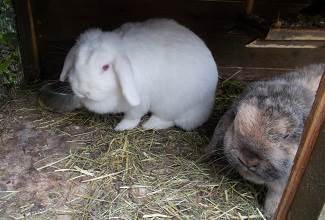
I board small pets for £1 per animal per day. The money raised for boarding goes directly to the education charity Porridge and Rice that works among the extreme poor living in the Nairobi slums.
In addition, if you have small animals that you no longer can care for, regardless of the reason, I will happily take them in and rehome them. If I cannot find them a new, good home, they will live their days out at The Farm at 64.